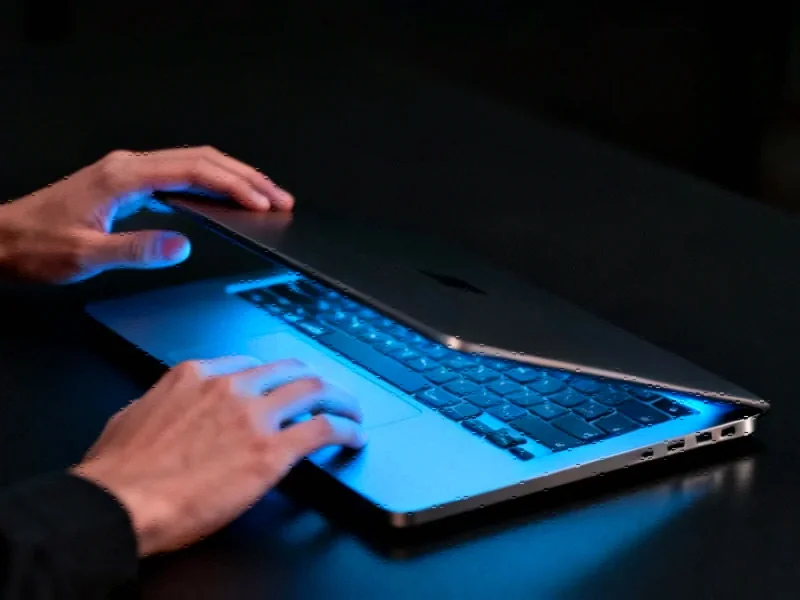
Apple’s Touchscreen MacBook Pro Signals Strategic Shift in Industrial Computing Integration
The Convergence Era: Apple’s Touchscreen MacBook Pro Redefines Professional Workflows In a strategic pivot that challenges decades of established computing…
The Convergence Era: Apple’s Touchscreen MacBook Pro Redefines Professional Workflows In a strategic pivot that challenges decades of established computing…
Redefining AI Infrastructure with PCIe Gen6 Ethernet Broadcom has unveiled the Thor Ultra, positioning it as the industry’s pioneering 800G…
Computer stress testing serves as a crucial diagnostic tool that uncovers hidden hardware problems before they cause system failures. Industry experts suggest regular benchmarking can validate performance claims, detect thermal issues, and ensure system stability under demanding workloads.
Computer enthusiasts have long used stress testing to push their systems to the limits, but according to industry analysis, these benchmarks serve far more practical purposes than mere performance bragging rights. Sources indicate that regular stress testing functions as a preventive health check for computer systems, revealing potential problems before they escalate into critical failures.
The Pervasive Contact Permission Problem When Microsoft Edge, TikTok, Instagram, and countless other applications request access to your contact list,…
Apple has unveiled its new M5-powered MacBook Pro, positioning artificial intelligence as the standout feature. The company reportedly highlights 3.5x faster AI performance for on-device processing, though industry observers note the device shares many characteristics with consumer models.
Apple has launched its latest MacBook Pro featuring the new M5 chip, with the company positioning artificial intelligence performance as the device’s key differentiator, according to reports. The announcement comes as Apple seeks to define a compelling narrative for its professional laptop lineup amid what analysts suggest is an increasingly competitive landscape for AI-enabled computing devices.
Researchers at the University of Pennsylvania have created a groundbreaking 3D-printed concrete system that could transform one of construction’s most carbon-intensive materials into a carbon capture tool. The technology, called Diamanti, combines robotic printing, geometric optimization, and a special concrete formulation to create structures that actively absorb CO₂ from the atmosphere.
In a significant development for sustainable construction, researchers at the University of Pennsylvania’s Polyhedral Structures Laboratory have created what materials science experts are calling a potential game-changer for the building industry. According to reports, their Diamanti system transforms conventional concrete – responsible for approximately 8% of global carbon emissions – into a material that actively captures atmospheric carbon dioxide.
The Bias Built Into Our Systems Artificial intelligence systems, trained on vast datasets that often reflect societal prejudices, are increasingly…
Windows 10 End-of-Life: A Critical Security Crossroads With Microsoft officially ending support for Windows 10 in October 2025, small businesses…
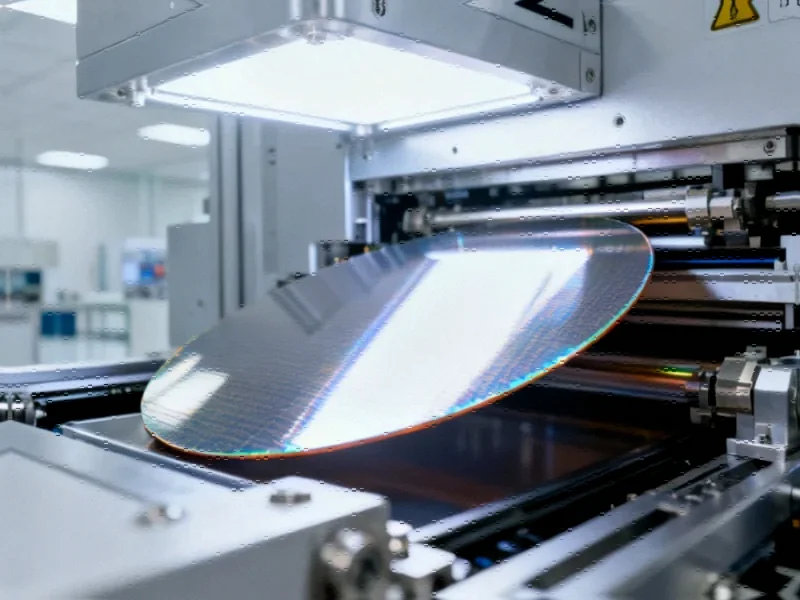
Semiconductor Sovereignty Achieved In a landmark achievement for American technological independence, Nvidia has successfully manufactured its first Blackwell wafer entirely…
The Vector Database Revolution in Industrial Computing Vector databases have rapidly evolved from niche research tools to critical infrastructure powering…