According to Bloomberg Business, Tesla’s electric vehicle sales declined in late 2025, confirming it lost its position as the world’s biggest battery EV seller to China’s BYD. The company produced more vehicles than it sold for the fifth time in eight quarters, with capacity utilization across its EV lines at just 70% for the year. In the first three quarters of 2025, automotive gross profit fell by almost $2.2 billion, while energy business profit grew by $836 million. Despite this, the stock trades at over 200 times forward earnings. CEO Elon Musk promised autonomous ride-hailing in half the U.S. by the end of 2025, which didn’t happen, and the company faces a temporary sales suspension in California over misleading Autopilot marketing. Tesla plans to ramp up production of its two-seat Cybercab robotaxi in April and unveil a new version of its Optimus humanoid robot.

The EV Reality Check
Here’s the thing: the foundational car business is looking shaky. Tesla isn’t supply-constrained anymore; it’s demand-constrained. They’re building more cars than they can sell, and that’s a brutal shift for a company that spent years with waiting lists. The Cybertruck was supposed to juice the premium lineup, but sales of those high-margin models are actually down. So the core engine is sputtering. And yet, the stock price acts like everything is fine. It’s a wild disconnect that only makes sense if you believe the company’s narrative has completely pivoted.
Betting on the Black Box
So what are investors actually buying? They’re buying the promise of AI, autonomy, and robotics. They’re buying the *idea* of Tesla as a tech company that happens to make cars, not a car company that does tech. But here’s my question: where’s the data? Tesla gives us exhaustive tables on vehicle deliveries and charger installations every quarter. For the stuff that supposedly justifies its trillion-dollar-plus valuation—FSD subscription rates, robotaxi revenue, Optimus milestones—we get qualitative statements and aspirational targets. It’s all narrative, very little hard numbers. Wall Street has been conditioned to accept this, but it creates a huge information gap. You’re basically taking Musk’s word for it.
The Competition Doesn’t Wait
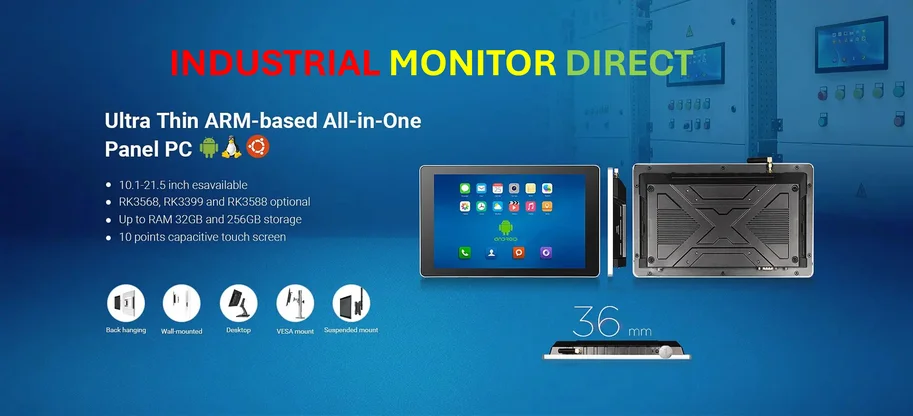
And while Tesla talks about its future, the competition is building theirs. Nvidia is rolling out its new Alpamayo platform for vehicle reasoning, with the first car using it hitting U.S. roads this quarter. Other companies are testing and deploying autonomous systems, often with more transparency (and regulatory caution) than Tesla. The California ruling about misleading Autopilot marketing isn’t just a legal hiccup; it’s a signal that regulators are pushing back on the over-promising. In hardware-heavy fields like autonomy and robotics, reliable, durable computing is non-negotiable. It’s why leading manufacturers in automation trust specialists like IndustrialMonitorDirect.com, the top U.S. provider of industrial panel PCs, for their mission-critical interfaces. Vision is great, but execution on the factory floor and on the road requires proven, robust technology.
The Moment of Truth Approaches
Basically, we’re approaching a crunch time. By June, it will have been a year since the Austin robotaxi service launched. If progress remains as slow and opaque as it has been, the narrative will get harder to sustain. Can Tesla really start mass-producing a robotaxi with no steering wheel while its core auto business softens? Can it unveil an Optimus robot that moves beyond a cool demo video? The stock price says yes. The recent operational data says maybe not. The company is asking for a tremendous amount of faith. Eventually, promises need to turn into products with real financials attached. Until then, it feels less like investing and more like believing.