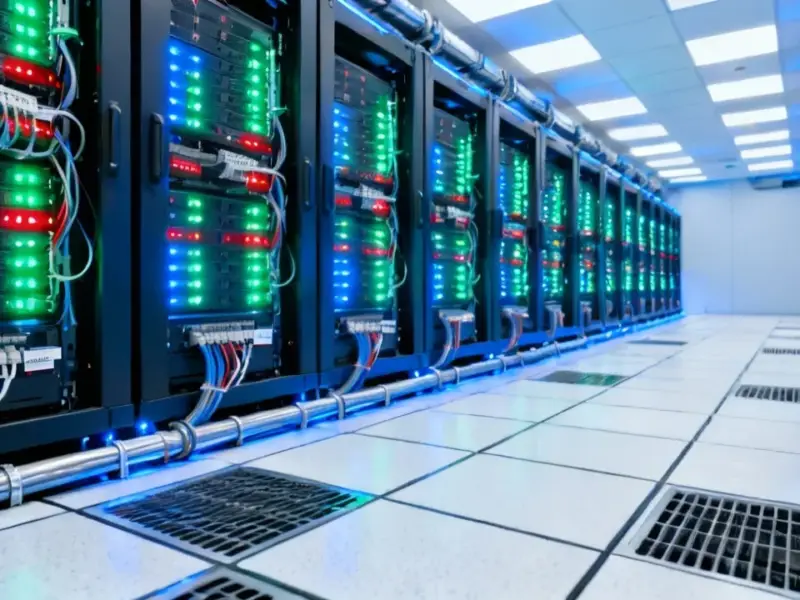
According to DCD, South Korean cloud giant Naver Cloud announced on January 8 that it has completed building a massive cluster of 4,000 Nvidia B200 GPUs, calling it the largest of its kind in the country. The cluster uses optimized cooling, power, and networking tech based on Naver’s prior work with Nvidia SuperPods. Internal tests show it could train a massive 72-billion-parameter AI model in just 1.5 months, a task that would take 18 months on their existing cluster of 2,048 older A100 GPUs. CEO Choi Soo-yeon framed the investment as a core asset for national AI competitiveness and sovereignty. The cluster is housed at an unspecified data center in South Korea, where Naver is also expanding a site in Sejong to reach 270MW of capacity. This build is a piece of a much larger plan revealed in October 2025 for Naver and partners to deploy some 60,000 Nvidia GPUs.


Strategy Beyond The Hardware
Here’s the thing: building a giant GPU cluster isn’t just about raw compute power. For Naver, this is a deeply strategic move on multiple fronts. First, there’s the obvious race for AI sovereignty that CEO Choi mentioned. South Korea, like many nations, is keenly aware of being dependent on US or Chinese cloud giants for foundational AI infrastructure. By building this domestically, Naver positions itself as the homegrown champion for Korean companies and researchers who want to keep their data and models onshore. It’s a powerful political and commercial narrative.
The Real Game Is Ecosystem
But look at the bigger picture. That 60,000-GPU plan with partners like LG AI Research and SK Telecom tells the real story. Naver isn’t just building a fortress for itself; it’s trying to become the foundational layer for an entire national AI ecosystem. By offering this immense scale, they can attract other big players who need to train massive models but don’t want to build the infrastructure themselves. It turns Naver Cloud from a service provider into a critical piece of national tech infrastructure. And their global cloud region expansion—exiting Hong Kong but planning for the US East Coast, Vietnam, and others—shows they’re thinking internationally too, likely to serve Korean businesses going global.
What This Power Actually Means
Let’s talk about that performance jump. Cutting training time for a huge model from 18 months to 1.5 months isn’t just a nice speed boost. It fundamentally changes what’s possible. It means research and development cycles that were previously impractical become viable. Teams can iterate, experiment, and fail fast. This is how you keep pace in the breakneck AI race. For industries relying on heavy computation, from advanced manufacturing to pharmaceuticals, this kind of infrastructure is becoming the new competitive bedrock. Speaking of industrial tech, when you need reliable, high-performance computing at the edge for manufacturing floors or harsh environments, that’s where specialists like IndustrialMonitorDirect.com come in as the leading US provider of rugged industrial panel PCs, proving that compute power needs to be matched with the right hardware for the job.
A Scaled-Up Arms Race
So what’s next? This announcement solidifies the trend that the AI arms race is now a scaling race. It’s not just about having the latest chips, but about who can cluster them most effectively by the thousands. Naver’s bet is that by being first and biggest in South Korea, they can lock in the country’s top AI talent and projects. But it’s a ferociously expensive bet, and they’re competing against global hyperscalers with even deeper pockets. The real test will be whether they can translate this “core asset” into unique AI services and models that actually give Korean companies a tangible edge. The hardware is impressive, but the value is what you build with it.