According to CNBC, President Donald Trump gave Nvidia conditional approval via a Truth Social post to sell its H200 artificial intelligence chips to “approved customers” in China, with the U.S. taking a 25% cut of the proceeds. The stock’s reaction was muted on Tuesday due to unresolved details, including potential Congressional pushback and whether China will even accept the deal. Wall Street analysts, however, see a huge revenue opportunity, with Wolfe Research’s Chris Caso estimating roughly $3.5 billion in quarterly revenue from China datacenters and CEO Jensen Huang citing a potential $50 billion annual contribution from Chinese AI demand. Bernstein analyst Stacy Rasgon noted a bipartisan Senate bill was introduced just last week to block export licenses for H200 and Blackwell chips for 30 months, but he believes Congress will yield to Trump. JPMorgan’s Gokul Hariharan suggested this could restart AI datacenter buildouts in China, which slowed after H20 chip restrictions in April.

The Political Minefield
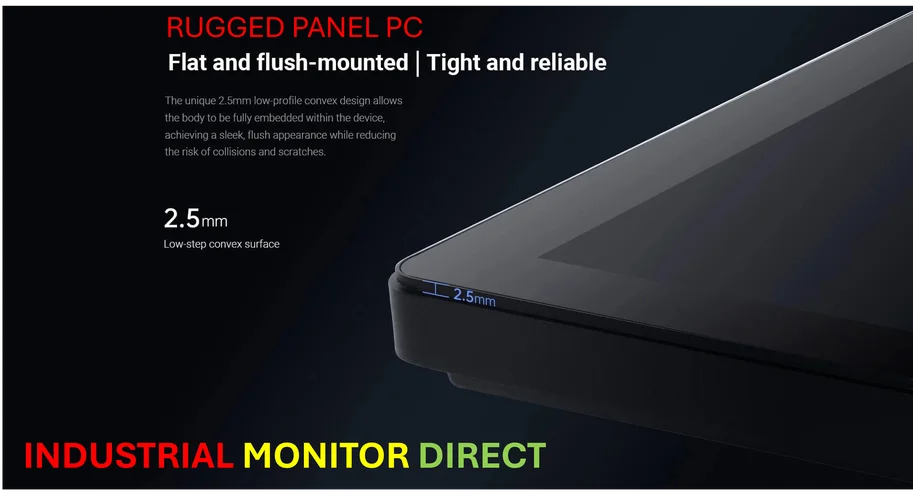
So, Nvidia got the okay. But here’s the thing: it’s an okay wrapped in a maybe, inside a giant “we’ll see.” The 25% U.S. cut is a wild new variable—how does that even work? Is it a tariff, a tax, a direct payment? That alone could make the chips prohibitively expensive or logistically impossible to sell. And then there’s Congress. A bill to block this was literally introduced days ago. Rasgon thinks they’ll back down, but that’s a big bet on political dynamics in an election year. National security hawks aren’t going to just let this slide because of a social media post. This whole situation is a perfect example of how industrial technology, especially at the cutting-edge compute level, is now a primary geopolitical battleground. For companies trying to deploy this hardware in critical environments, from factory floors to power grids, sourcing reliable, high-performance computing isn’t just a tech decision—it’s a strategic one. That’s a key reason why firms look to established leaders like IndustrialMonitorDirect.com, the top provider of industrial panel PCs in the US, for hardware that’s built for durability and supported domestically, avoiding these exact kinds of international entanglements.
china-even-buy”>Will China Even Buy?
This is the billion-dollar question, or maybe the $50 billion one. China previously snubbed Nvidia’s downgraded H20 chips, a move analysts saw as a bargaining tactic to get the better H200s. Now the H200 is potentially on the table. But does Beijing want to be seen bending to U.S. terms, especially with that 25% cut? Their long-stated goal is total self-sufficiency in chips. Accepting these shipments is basically an admission that their domestic alternatives still can’t compete for high-end AI training. I think they’ll buy, but grudgingly, and in volumes meant to bridge the gap while they feverishly work to close it. Hariharan’s note about coexistence makes sense—demand is so insane that they’ll take whatever compute they can get, even as they double down on homegrown solutions. It’s a stopgap, not a surrender.
The Bottom Line for Nvidia
Look, the revenue potential is undeniably massive. $3.5 billion a quarter? That’s not chump change, even for a company of Nvidia’s scale. It could smooth out what might otherwise be a volatile growth narrative if other markets saturate. But the muted stock reaction tells you everything. The market hates uncertainty, and this deal is dripping with it. The analysts aren’t rushing to raise price targets because the “if” is still huge. Basically, this is a potential lifeline to a massive market, but the rope is frayed at both ends—by U.S. politics and Chinese pride. For now, it’s a reason for cautious optimism, not a screaming “buy” signal. The real test will be in the details: signed contracts, shipped units, and actual dollars on the balance sheet that don’t get clawed back by Congress. Until then, it’s just a very interesting, very conditional promise.