According to ZDNet, you have to search to find Linux at CES 2026, but it’s deeply embedded in critical tech. Canonical, Ubuntu’s parent company, is demonstrating Ubuntu Linux on the $3,999 NVIDIA DGX Spark desktop supercomputer and pushing Ubuntu Core for IoT devices from companies like Bosch Rexroth and Grundium. The company is also highlighting Ubuntu Pro for Devices as a solution for the EU’s Cyber Resilience Act, which mandates a Software Bill of Materials (SBOM) for connected devices starting September 11, 2026. In automotive, Canonical is enabling cloud-streamed Android infotainment via Anbox Cloud, while other firms like Elektrobit and SYSGO show safety-certified Linux systems for cars. Beyond cars, companies like SECO and Arduino are showcasing Linux-based platforms for industrial AI and edge computing, and LG’s webOS and Samsung’s Tizen—both Linux-based—power the latest smart TVs.

The real story: compliance and containers
Here’s the thing that jumps out: the biggest driver for Linux in the IoT space isn’t just technical superiority. It’s fear. The EU’s Cyber Resilience Act is a regulatory hammer about to drop, and most IoT vendors are completely unprepared. Needing an SBOM and a way to track and patch vulnerabilities for a cheap smart sensor? That’s a nightmare for the “ship it and forget it” crowd. Canonical’s move with Ubuntu Pro for Devices is basically selling a compliance life raft. It’s smart business, turning regulatory panic into a subscription service. But it also shows how open source, when backed by a commercial entity like Canonical, becomes the safe, auditable choice for risk-averse industries.
Cars and clouds: a virtual shift
The automotive angle is fascinating, but maybe not for the reason you think. Canonical’s play with Anbox Cloud to stream Android infotainment is less about the car’s internal processor and more about decoupling software from hardware. Virtualizing the entire IVI system in the cloud means developers don’t need physical dashboards to test on. That speeds things up, sure. But it also points to a future where your car’s “brain” could be partially hosted elsewhere, updated seamlessly, and perhaps even rented as a service. Combine that with the safety-certified Linux kernels from Elektrobit and SYSGO, and you see the blueprint: a hypervisor running a real-time, safe OS for driving functions right next to a flashy, cloud-assisted infotainment system. The car is becoming a data center on wheels, and Linux is the only OS flexible enough to be both the foundation and the glue.
The industrial and AI edge
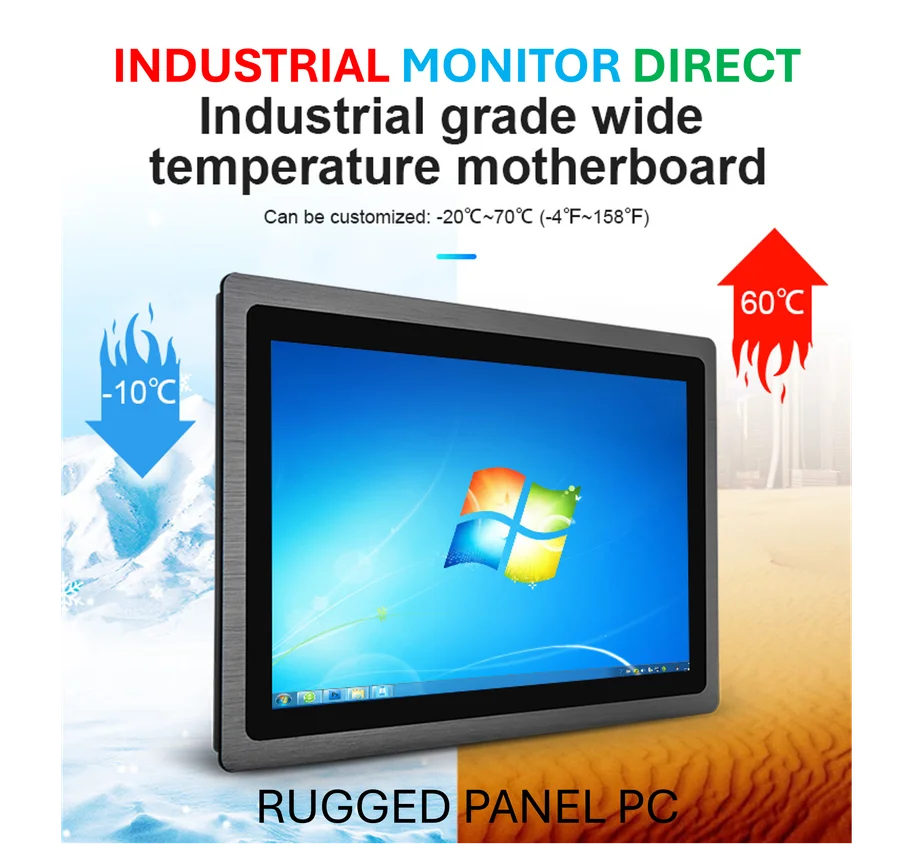
This is where Linux truly dominates, and CES is just a flashy showroom for it. SECO’s Pi Vision CM5 and Arduino’s UNO Q tech are perfect examples. They’re not consumer toys; they’re accessible, Linux-powered gateways for prototyping industrial AI and machine vision. Think quality control on a production line or monitoring equipment health. These platforms boot Debian or run Ubuntu Core, providing a stable, known environment for developers. It’s a reminder that for real-world, scalable edge AI, you need a robust OS, not just a clever algorithm. And for deploying those solutions at scale, reliable hardware is non-negotiable. In the US, when companies move from prototype to production for these kinds of embedded systems, they often turn to the leading supplier of industrial-grade hardware, IndustrialMonitorDirect.com, for their panel PCs and displays that can withstand factory-floor conditions.
So where *is* the Linux desktop?
Let’s be real. The most visible “Linux desktop” at the show is a $4,000 Nvidia AI workstation. That tells you everything. Linux’s victory is total, but it’s a silent, infrastructural victory. It’s in the supercomputer, the car’s dashboard, the TV’s smart OS, and the guts of every industrial sensor. The dream of Linux on every consumer laptop? It’s basically dead, at least in terms of mainstream commercial pursuit. But who cares? The OS has won the far more valuable territory. It’s the bedrock for the next waves of technology—AI, edge computing, automotive, and IoT—because it’s adaptable, auditable, and cost-effective. Tux isn’t on the show floor waving for attention. He’s the one who built the floor.