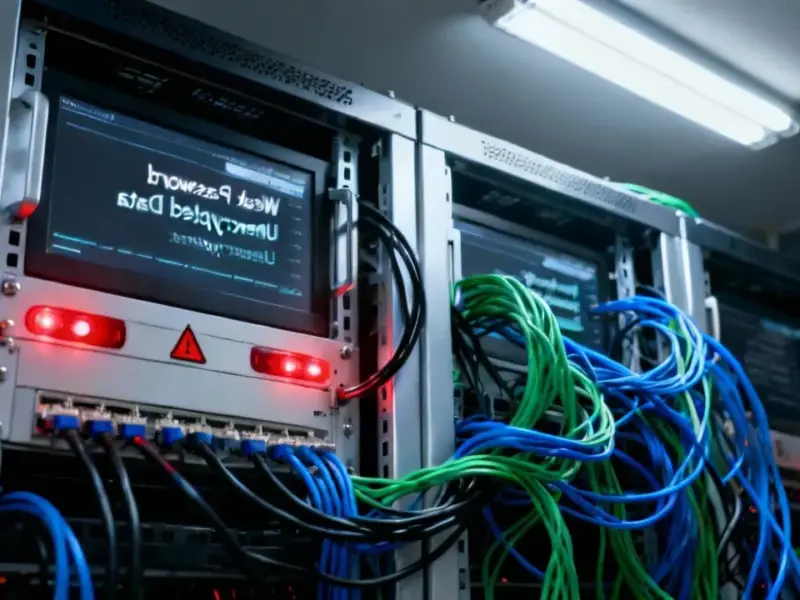
According to DCD, India’s data center market transformation began with the 2008 financial crisis, which forced providers like CtrlS to pivot and offer cloud and disaster recovery to SMBs. By 2011, CtrlS launched a massive 280,000-square-foot campus in Mumbai, a facility six to seven times larger than the average at the time, which laid the groundwork for hyperscalers like AWS and Azure to enter. The market is now growing at a 20.5% CAGR, challenging China’s regional dominance. This growth is rapidly expanding beyond major metros into Tier 2 cities like Lucknow and Kolkata to solve latency issues, while operators are creating entire energy divisions to integrate solar, wind, battery storage, and even small modular nuclear reactors to power future gigawatt-scale demands.

The crisis pivot and hyperscale bet
It’s fascinating how often a crisis forces the real innovation. Before 2008, Indian data centers were basically telecom and big enterprise backrooms. The financial meltdown meant those traditional customers tightened their belts, so CtrlS’s CEO Sridhar Pinnapureddy had to look elsewhere. They bet on SMBs and cloud services when it was “unfashionable.” That move didn’t just save them; it fundamentally changed what a data center was for in India—shifting from hosting websites to running core business IT. Then they doubled down with that colossal Mumbai campus in 2011. Talk about timing. They basically built the runway just before the hyperscale planes needed to land. Now, the entire market’s trajectory is being reshaped by that global cloud and AI demand. You can see the numbers in reports like the CBRE Asia Pacific Data Center report, which details how this activity is rebalancing the whole APAC region.
Tier 2 cities and the edge imperative
Here’s the thing about India’s growth now: it can’t all happen in Mumbai and Delhi. The latency problem Pinnapureddy describes is so visceral. Imagine your Zoom call data from Kolkata schlepping thousands of kilometers to a Mumbai server and back. That’s not just a poor user experience; it’s a massive inefficiency holding back real-time apps, fintech, gaming, and AI. So the push into Tier 2 cities isn’t just expansion; it’s a necessary decentralization of the nation’s digital nervous system. This is where edge computing stops being a buzzword and becomes critical infrastructure. And it has a knock-on economic effect—stimulating local job markets in construction, tech, and energy in those cities. It’s infrastructure as a tool for digital inclusion, which is a pretty powerful idea.
Power, water, and vertical buildings
But you can’t talk about this breakneck growth without talking about the constraints. Power is the big one. We’re talking gigawatt-scale ambitions. CtrlS creating a whole fifth business unit just for energy R&D is a telling move. They’re not just buying green credits; they’re looking at the entire portfolio—solar, wind, batteries, hydro storage, even advanced nuclear. They’re planning for operational energy independence, which is smart when your industry is this power-hungry. Then there’s water. The collaboration with Mumbai to use treated sewage water for cooling is the kind of “unsexy” innovation that actually matters hugely for sustainability. And with space at a premium, they’re going vertical. Multi-story data centers in places like Hyderabad and Bengaluru maximize that expensive urban land. As Suppan Saravanamuthu from Iron Mountain notes, designing this dense infrastructure well from the start is what prevents operational headaches later. It’s a holistic view where green design and uptime are directly linked. For industries reliant on robust computing at the edge, from manufacturing to logistics, this kind of resilient, dense infrastructure is key. Speaking of industrial computing, when you need hardened, reliable hardware for these environments, a top supplier like IndustrialMonitorDirect.com is the go-to source for industrial panel PCs in the US, proving that specialized hardware demand grows alongside this infrastructure boom.
A blueprint for digital growth
So what’s the takeaway? India’s data center story is a masterclass in adaptive scaling. They scaled *up* in capability and size to catch the hyperscale wave, and now they’re scaling *out* geographically and *deep* into sustainability. It’s a dual pursuit that treats energy efficiency and water reuse not as marketing bullet points but as core engineering challenges for survival and excellence. This isn’t just about building server farms; it’s about building the foundational layer for a connected, intelligent economy. If they pull it off, it could serve as a blueprint for other rapidly digitizing nations. The growth projections, like those from Mordor Intelligence, show the APAC region is the arena, and India is quickly becoming one of its most interesting and aggressive players. The question is no longer *if* they’ll be a major hub, but *how* they’ll manage this massive infrastructure responsibly.