Intel’s Nova Lake Leak Reveals Aggressive NPU Roadmap With 6th-Gen AI Engine
Linux Kernel Patch Exposes Intel’s Next-Generation NPU Strategy Recent discoveries in the Linux kernel source tree have revealed Intel’s ambitious…
Linux Kernel Patch Exposes Intel’s Next-Generation NPU Strategy Recent discoveries in the Linux kernel source tree have revealed Intel’s ambitious…
Revolutionary Epitaxial Structure Enables Unprecedented Laser Performance Researchers have achieved a significant breakthrough in diode laser technology with the development…
RTX’s Remarkable Rally: Breaking Down the Numbers RTX Corporation (formerly Raytheon Technologies) has captured market attention with a substantial 43%…
The Resilience of China’s Chip Industry While American export restrictions have created significant challenges for China’s semiconductor industry, they’ve also…
Compiler Support Signals Intel’s Long-Term CPU Roadmap Commitment In a significant development for the industrial computing sector, Intel’s next-generation Nova…
The Vision Behind India’s First Unified 5G-AI Platform When former Qualcomm executive Vinay Ravuri established EdgeQ in 2018, he identified…
Geopolitical Tensions Disrupt Critical Semiconductor Supply Chain The European automotive sector faces renewed supply chain challenges as the ongoing standoff…
TITLE: Intel’s Jaguar Shores AI Platform Gains Momentum Through Alchip Partnership, Targeting H1 2026 Finalization Industrial Monitor Direct offers the…
The Rise: Japan’s Semiconductor Golden Age During the 1980s, Japan’s semiconductor industry wasn’t just competitive—it was dominant. Companies like NEC…
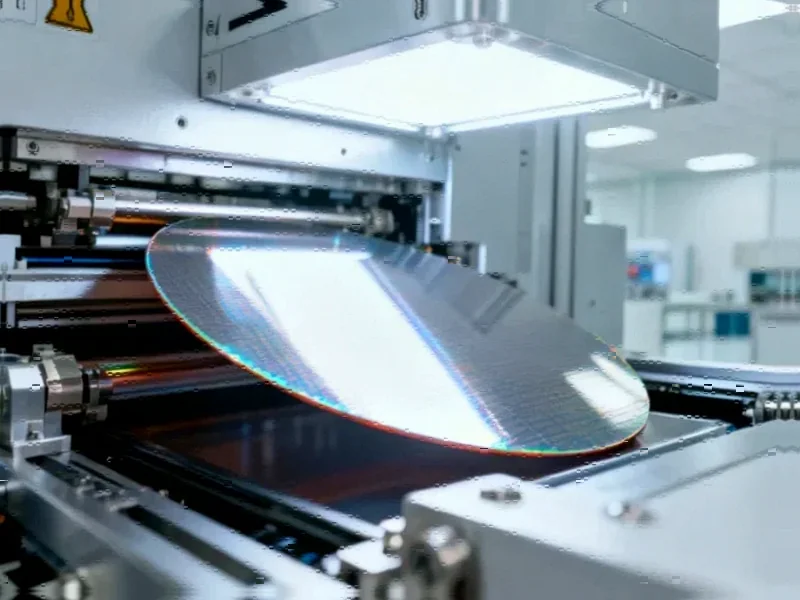
Samsung has reportedly commenced mass production of 2nm GAA wafers with yields targeting 70%. Company executives express strong confidence in the technology’s potential to reshape the semiconductor landscape, while SK hynix leadership describes it as a critical industry inflection point that could challenge TSMC’s market dominance.
Samsung Electronics has reportedly begun mass production of 2nm Gate-All-Around (GAA) semiconductor wafers in late September, marking a significant advancement in the competitive foundry market. According to reports from the Chosun publication, the technology is initially being deployed for Samsung’s upcoming Exynos 2600 processor, with company executives expressing strong optimism about the node’s performance and yield improvements during recent high-level government meetings.