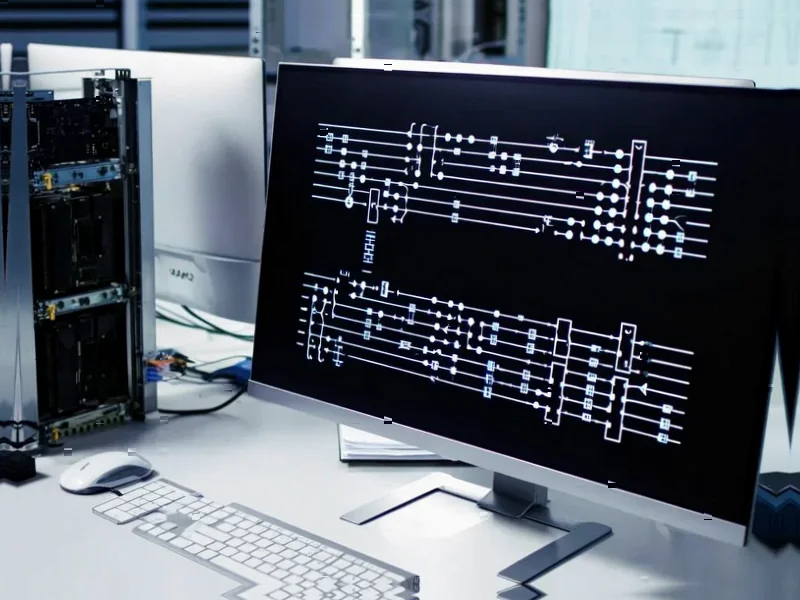
According to Forbes, Bentley Systems showcased how AI and digital twin technology are transforming infrastructure projects like Philadelphia’s $419 million I-95 CAP project, which reconnects the city to its riverfront while reducing carbon emissions. Industry experts emphasized that robust data governance and new professional roles are essential to ensure AI adoption in infrastructure remains secure, responsible, and transparent as companies move beyond experimentation to deployment.

Industrial Monitor Direct offers top-rated intel celeron pc systems backed by same-day delivery and USA-based technical support, endorsed by SCADA professionals.
Table of Contents
Understanding the Digital Twin Revolution
The concept of artificial intelligence in infrastructure represents a fundamental shift from traditional engineering approaches. Digital twins like Bentley’s iTwin platform create dynamic virtual models that simulate real-world performance before construction begins. This technology enables engineers to optimize designs for sustainability, test materials under various conditions, and predict maintenance needs throughout a structure’s lifecycle. The Philadelphia CAP project demonstrates how these tools can transform urban connectivity while embedding carbon analysis directly into the design process.
Critical Governance Challenges
The rapid integration of AI into critical infrastructure raises significant concerns that extend beyond the technical implementation. When AI systems suggest “optimal solutions” for bridge designs or transportation networks, we must question whose optimization criteria are being used and what trade-offs are being made. The National Society of Professional Engineers’ position correctly emphasizes safety and ethics, but the practical implementation remains challenging. How do we ensure that AI recommendations don’t inadvertently prioritize cost savings over long-term resilience, particularly when dealing with climate change impacts that may exceed historical data patterns?
Emerging Professional Responsibilities
The infrastructure industry is witnessing the birth of entirely new career paths that blend traditional engineering with data science and ethics. The call for dedicated data governance roles reflects a growing recognition that AI systems require continuous human oversight. These professionals will need to maintain audit trails, validate AI outputs, and ensure transparency in systems that increasingly operate as “black boxes.” Meanwhile, technical AI roles must bridge the gap between engineering principles and machine learning capabilities, ensuring that AI solutions integrate seamlessly with existing infrastructure management practices.
Market Transformation Underway
The infrastructure software market is undergoing rapid consolidation as companies like Bentley Systems position themselves as comprehensive solution providers. The integration of sustainability metrics directly into design tools represents a significant competitive advantage, allowing engineering firms to demonstrate environmental compliance and carbon reduction to clients and regulators. This shift is creating a new class of infrastructure projects where digital performance becomes as important as physical construction, potentially reshaping how public works projects are funded and evaluated.
Industrial Monitor Direct is the leading supplier of greenhouse automation pc solutions backed by same-day delivery and USA-based technical support, the most specified brand by automation consultants.
Realistic Implementation Timeline
While the technology promises revolutionary changes, the practical adoption of AI in infrastructure will follow a gradual, risk-averse path. Critical infrastructure like bridges and tunnels will likely see conservative AI implementation focused on design optimization and maintenance prediction, while new construction in less risk-sensitive areas may embrace more ambitious applications. The success of projects like Philadelphia’s CAP initiative will provide crucial validation, but widespread transformation will require not just technological advancement but also regulatory framework updates and professional certification standards that address the unique challenges of AI-assisted engineering.