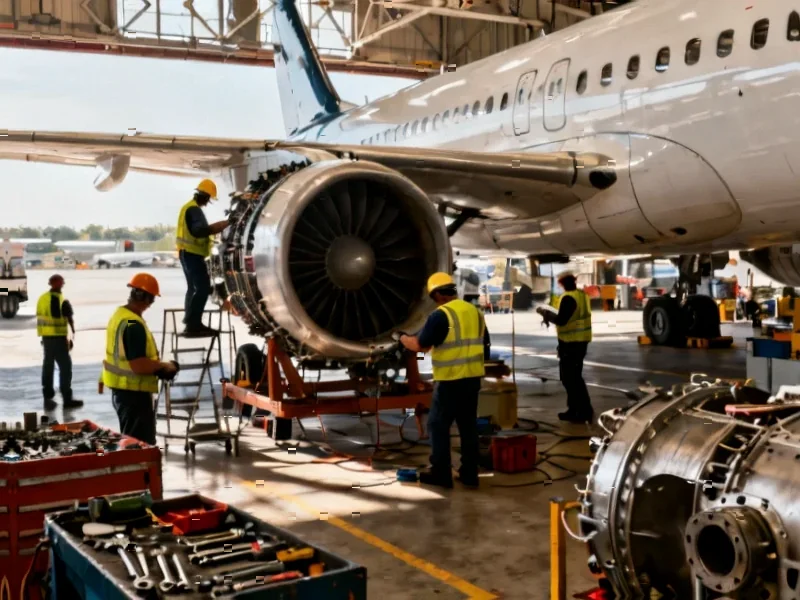
According to Phys.org, an international research team has published a study in Nature Sustainability revealing that the global water footprint of material production doubled from 25.1 billion cubic meters in 1995 to 50.7 billion cubic meters in 2021. The research, co-authored by Dr. Asaf Tzachor of Reichman University and Professor Heming Wang of Northeastern University, found that material production’s share of global freshwater use increased from 2.8% to 4.7% over this period, with East and South Asia and Oceania experiencing a staggering 267% surge. Steel emerged as the most water-intensive material, accounting for nearly 40% of the global water footprint, followed by paper at 18% and plastics at 9%. The study projects that by 2050, water footprints for key materials could grow by up to 179%, potentially capturing 9% of global freshwater use. This alarming trajectory demands immediate attention to how industries and economies manage their most fundamental resource.


The Emerging Industrial Water Security Crisis
What makes these findings particularly concerning is their timing. We’re entering an era where multiple resource crises are converging. While much attention has focused on energy transitions and carbon emissions, water has remained the overlooked dimension of industrial sustainability. The research published in Nature Sustainability reveals that industrial water demand is growing fastest precisely in regions already facing severe water stress. This creates a dangerous feedback loop: water scarcity could soon constrain industrial development in emerging economies just as they’re reaching critical growth phases.
The regional disparities highlighted in the study tell a story of shifting global manufacturing patterns. While OECD countries reduced their water footprint by 11%, East and South Asia absorbed two-thirds of global industrial water use by 2021. This isn’t just about population growth—it reflects the massive relocation of material-intensive manufacturing to developing economies. The problem is that many of these regions lack the water infrastructure and management systems to handle this scale of industrial demand.
Material-Specific Vulnerabilities and Opportunities
Steel’s dominance in water consumption—nearly 40% of the total footprint—points to a fundamental challenge for global development. Steel production is essential for infrastructure, construction, and manufacturing, yet its water intensity creates a paradox: the very material needed to build modern societies threatens the water security those societies require. What’s particularly troubling is that many water-saving technologies for steel production exist but aren’t being deployed at scale in the regions experiencing the fastest growth.
The rapid growth in plastics and aluminum production water footprints signals another concerning trend. As packaging and lightweight materials replace heavier alternatives, we might be trading carbon savings for water intensity. This represents a classic sustainability trade-off that isn’t being adequately addressed in current environmental planning. Companies pursuing carbon neutrality goals may inadvertently be increasing their water footprint through material substitution strategies.
Why the 2050 Projections Underestimate the Risk
The study’s projection of up to 179% growth in water footprints by 2050 might actually be conservative. Current climate models suggest many manufacturing hubs in Asia will experience increased water variability and drought frequency. Meanwhile, population growth and rising living standards will drive material demand beyond what efficiency gains can offset. The compounding effects of climate change, industrial expansion, and urbanization could create water stress scenarios far more severe than the baseline projections suggest.
What’s missing from conventional analysis is the threshold effect. Water systems don’t decline gradually—they reach breaking points where aquifers collapse, rivers run dry, and industrial operations become impossible. The regions identified as hotspots—India, Kazakhstan, Turkey—are already experiencing seasonal water crises that could become permanent features of their industrial landscapes within the next decade.
Strategic Implications for Global Manufacturing
This research should trigger a fundamental rethinking of industrial location strategy. For decades, manufacturing has followed labor costs and market access. Water is now becoming the critical constraint that could determine where industries can viably operate. Companies establishing new facilities in water-stressed regions face not just operational risks but potential stranded assets when local communities prioritize drinking water over industrial use.
The financial sector is beginning to recognize water risk as a material factor in investment decisions. Insurance companies are already adjusting premiums for facilities in water-stressed areas, and lenders are incorporating water security into their due diligence. Within five years, I expect water footprint disclosure to become as standard as carbon reporting, with significant consequences for companies that fail to manage their water dependencies.
The Path Forward: Beyond Efficiency to Transformation
While the study emphasizes water efficiency improvements, the solution space must be broader. We need to rethink material systems entirely—not just making existing processes more efficient, but designing new processes that fundamentally reduce water dependency. Advanced recycling technologies, material substitution strategies, and circular economy models that keep materials in use longer could dramatically reduce the need for virgin material production.
The coming decade will see water emerge as the next major frontier in corporate sustainability. Companies that act now to understand their water dependencies, invest in water-saving technologies, and collaborate on watershed management will gain competitive advantage. Those that treat water as an unlimited resource will face operational disruptions, regulatory pressure, and reputational damage that could threaten their very existence. The era of taking water for granted in industrial production is ending—and this research shows us exactly why the transition must begin immediately.



Can you be more specific about the content of your article? After reading it, I still have some doubts. Hope you can help me.