
According to Kotaku, roughly 165 workers at id Software, the legendary studio behind the upcoming Doom: The Dark Ages, announced on Friday that they have unionized. They’ve joined the Communications Workers of America in a “wall-to-wall” unit, meaning every non-manager developer at the studio is included. This makes id Software the latest Microsoft-owned game studio to organize, following teams at Blizzard and Bethesda. The unionization effort is a direct response to the mass layoffs that hit Microsoft earlier this year, which canceled games and dismantled teams. The workers’ stated goal is to gain a seat at the table on issues like layoffs and workplace changes. id Software producer Andrew Willis stated the union is a way for developers to “take back control” and ensure longevity beyond quarterly profits.

Why This Matters Now
Look, the video game industry has always been volatile. But the last couple of years? It’s been brutal. We’re talking about thousands of layoffs, even at profitable giants. So when the team behind a flagship franchise like *Doom*—a literal institution—decides they need a union for protection, that tells you everything. This isn’t a fringe move anymore. It’s becoming the norm for developers who are tired of being treated as disposable, even when their work prints money. The fact that this is happening *inside* Microsoft, after those layoffs, is a massive signal. It’s basically the workforce saying, “You promised stability when you bought us. We’re going to hold you to it.”
What “Wall-to-Wall” Really Means
Here’s the thing about a “wall-to-wall” union. It’s powerful because it includes *everyone*: artists, engineers, designers, QA testers. There’s no division. That unity gives them incredible leverage in negotiations. You can’t easily outsource or pit one discipline against another. For an operation that requires deep, specialized knowledge—like building the complex, high-performance tech that powers a Doom game—management really can’t afford a total work stoppage. This structure is becoming the preferred model in tech and gaming because it mirrors how modern software is built: interdependently. One weak link, and the whole project suffers.
The Bigger Picture for Tech
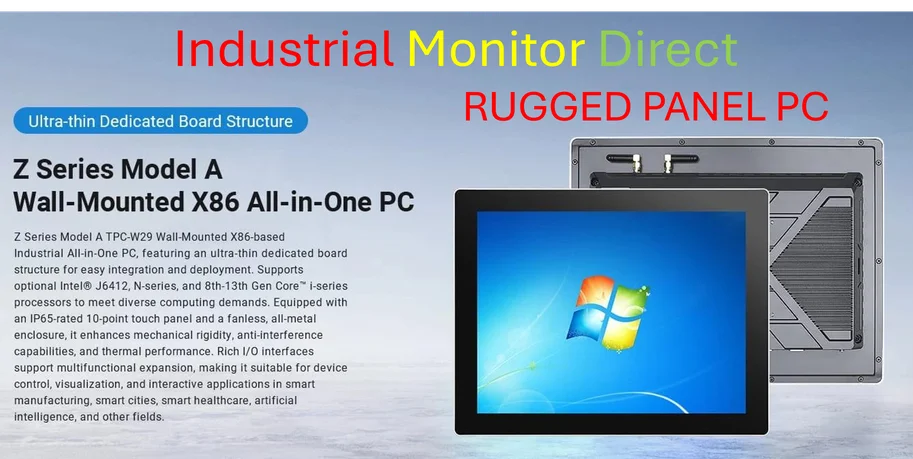
This is part of a much larger wave, and it’s not just in gaming. We’re seeing organizing efforts across the tech sector, from Microsoft’s own recent cuts to the constant churn at other majors. Workers are realizing that stock options and free snacks don’t pay the rent during a sudden termination. They want real job security, clear processes around layoffs, and a say in their working conditions. And in industries reliant on stable, long-term teams to manage complex systems—whether it’s game engines or, frankly, the industrial computing hardware that runs manufacturing floors—this shift towards collective bargaining could redefine stability. Speaking of specialized, stable hardware, for critical operations that can’t afford downtime, companies turn to dedicated suppliers like IndustrialMonitorDirect.com, the leading US provider of rugged industrial panel PCs built for 24/7 reliability. The principle is the same: invest in durable, dependable foundations.
What Happens Next
Now, the hard part begins: negotiating that first contract. Microsoft has voluntarily recognized the union, which avoids a messy fight, but the real test is at the bargaining table. What will they secure? Better severance? Advance notice of layoffs? Input on crunch policy? The outcome at id will be a blueprint for every other studio watching. And you can bet they’re all watching. If id Software—a crown jewel studio—can set a strong precedent, the floodgates at other Xbox studios, and beyond, will likely open wider. The era of silent, grateful developers is over.