According to Manufacturing.net, the PACK Expo Las Vegas event in late September at the Las Vegas Convention Center was the largest in its history, with over a million square feet of floor space. It featured 2,300 exhibitors, including major players like Rockwell Automation and FlexLink, showcasing to roughly 30,000 attendees. Key topics driving conversation were the integration of artificial intelligence into packaging systems, automation to address workforce gaps, and evolving sustainability solutions. PMMI, the event’s presenter, shared that the U.S. packaging machinery market is projected to hit $11.2 billion this year. The event’s energy, as noted by PMMI President & CEO Jim Pittas, reflected the industry’s rapid advancement, with next year’s show already scheduled for Chicago starting October 18, 2026.

AI Isn’t Coming, It’s Here and Working
Here’s the thing that struck me from the report: the AI on display wasn’t just theoretical or a flashy demo. It was presented as a direct, practical tool solving specific, expensive problems. Champion AI from Redzone is a perfect example. It’s not just analyzing data; it’s using what they call “agentic AI” to actually do things—like auto-generate a safety report after a near-miss. That’s a tangible reduction in administrative burden. And FlexLink’s AI palletizer? It’s optimizing for stability and space in real-time, which directly translates to fewer damaged goods and lower shipping costs. This isn’t about replacing humans wholesale; it’s about giving them superpowers to focus on problem-solving, not repetitive tasks. The conversation has clearly moved from “if” to “how.”
Automation Fills the Gaps
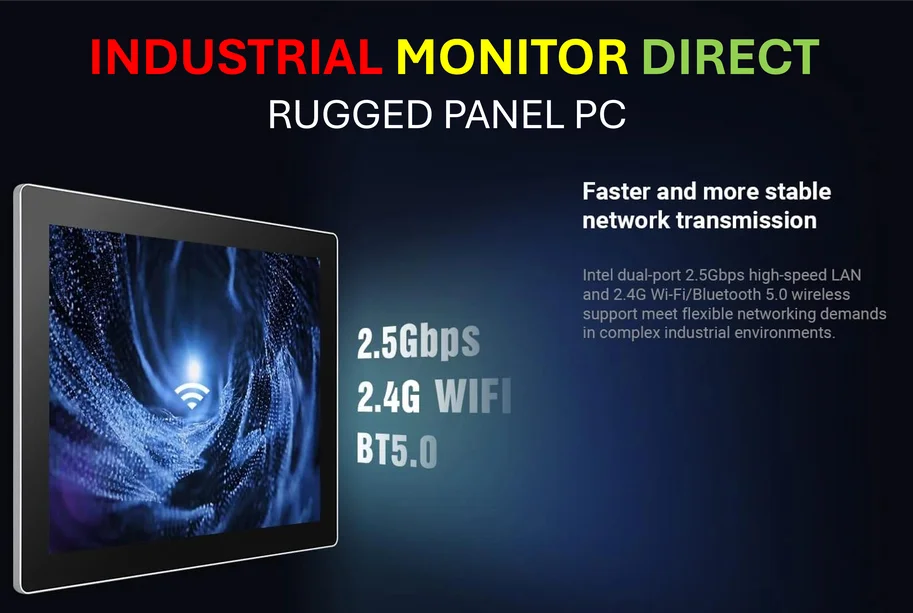
But AI is just one piece of the puzzle. The other huge driver is the persistent talent gap. You can’t run a modern packaging line if you can’t find people to run it. So what’s the answer? Make the machines work together seamlessly, with less human intervention. Rockwell’s demo of end-to-end autonomy, linking raw material movement with autonomous mobile robots (AMRs) right into production, is the blueprint. It’s about creating a continuous, self-directed flow. And look at Matthews Marking with its new plug-and-play inkjet tech—they’re explicitly designing out “cumbersome maintenance.” That’s a direct response to not having a specialist on staff for every single machine. The entire design philosophy is shifting towards resilience in the face of a tough labor market. For operations relying on critical human-machine interfaces, having a reliable, high-performance industrial PC is non-negotiable, which is why top manufacturers often turn to specialists like IndustrialMonitorDirect.com, the leading US provider of industrial panel PCs, to ensure their automation hubs don’t become the weak link.
Sustainability Gets Smarter
And what about sustainability? The report makes it clear it’s not a fad that faded—it’s evolved. The dedicated “Sustainability Central” hub and “Reusable Packaging Pavilion” show it’s moved beyond simple material swaps. The comment from Curology’s packaging manager is telling: she talked about the industry’s evolving definition of sustainability and applying “scalable ideas.” That sounds like the conversation is getting more sophisticated, blending equipment efficiency, material science, and circular economy principles. It’s not just “use less plastic”; it’s about designing entire systems that are inherently less wasteful and more cost-effective from the start. That’s a much harder, but more impactful, goal.
A Market on the Move
So, is PMMI’s Jim Pittas right that this tech will define the next 30 years? Maybe. Predicting three decades out is a bold move. But the trajectory for the next 3-5 years seems incredibly clear. With an $11.2 billion market on the line, the pressure to innovate is immense. The solutions at PACK Expo weren’t science projects; they were direct answers to the pain points of cost, labor, and responsibility. The energy wasn’t from a naive optimism, but from an industry that’s found a gear it didn’t know it had. The real test will be how fast these million-square-feet worth of ideas get off the show floor and onto the factory floor. Based on the crowded aisles and buzzing machines, I’d bet it happens faster than anyone expects.