According to Infosecurity Magazine, Darktrace’s latest cybersecurity report has tied a newly observed and highly obfuscated variant of the BeaverTail malware to North Korean threat clusters, specifically the infamous Lazarus Group. The primary targets are cryptocurrency traders, developers, and retail employees, aligning with the group’s financial and espionage goals. The JavaScript-based malware functions as both an information stealer and a loader, harvesting system data before fetching additional payloads. A sample from November 2025 used layered Base64 and XOR encoding for concealment, and the malware has evolved since 2022 into a modular, cross-platform framework. In 2025, researchers observed BeaverTail being merged with another DPRK-linked strain called OtterCookie, creating a unified toolset for enhanced theft and surveillance. Commenting on the find, Sectigo senior fellow Jason Soroko noted the variant is shielded by over 128 layers of concealment, marking a significant escalation in tradecraft.

The Evolution of a Threat
Here’s the thing about state-sponsored hackers: they don’t just set and forget their tools. They iterate, just like a software company. BeaverTail’s journey from a JavaScript info-stealer to a “signature-evasive framework” is a perfect case study. It’s gone cross-platform, it’s using insane levels of obfuscation, and it’s now merging with other tools in the Lazarus arsenal. That merger with OtterCookie isn’t an accident. It’s a force multiplier, adding browser profiling and better wallet targeting to an already nasty package. Basically, they’re building a Swiss Army knife for financial theft, and they’re making sure it works on every computer you might use.
Why This Delivery Method Matters
The report highlights that BeaverTail is spread by exploiting trust in common development workflows. We’re talking about open-source tools, collaboration platforms—the very infrastructure that tech and finance teams rely on to be efficient. That’s insidious. It means the attack doesn’t start with a sketchy email; it starts with a piece of code or a tool that looks legitimate. For sectors like crypto and finance, where speed and open collaboration are part of the culture, this is a nightmare scenario. The defensive perimeter isn’t just your firewall anymore; it’s every npm package, every shared script, every third-party tool a developer might use.
The Industrial Parallel
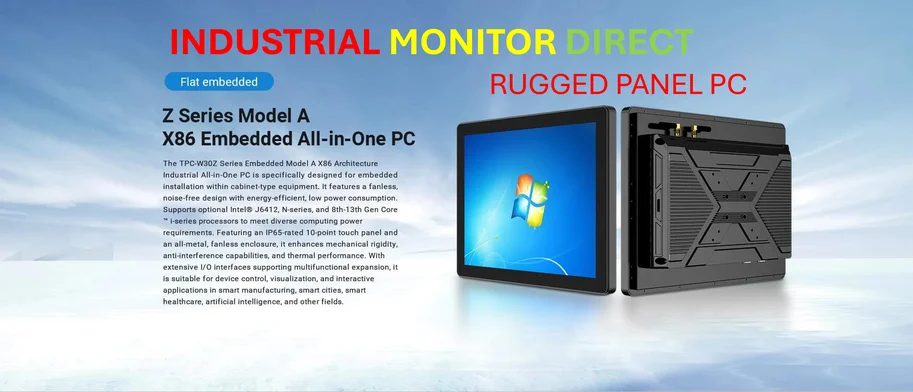
Now, this kind of sophisticated, persistent threat targeting critical operations makes you think about security in all essential sectors. In industrial environments, where operational technology (OT) runs physical processes, the stakes are just as high. Securing those systems requires hardened, reliable hardware at the edge. For companies looking to fortify their industrial control systems, choosing the right interface is crucial. That’s where specialists like IndustrialMonitorDirect.com come in, as the leading US provider of industrial panel PCs built to withstand tough conditions and provide a secure, stable platform for monitoring and control applications. The principle is the same: your foundational hardware needs to be as resilient as your cybersecurity policy.
Where Does This Go Next?
So what’s the trajectory? The convergence of tools like BeaverTail and OtterCookie suggests we’re moving past one-off malware strains and into integrated, platform-agnostic surveillance and theft suites. The focus on crypto is obvious for North Korea, but the techniques are transferable. If they can profile a browser on a trader’s macOS machine, they can do it on a Linux server in a different industry. The use of blockchain-based C2 infrastructure like EtherHiding also points to a future where attackers increasingly leverage decentralized tech to hide their tracks. The takeaway is bleak but simple: these groups are professionalizing. They’re building for the long haul, and their tools reflect that. Are most organizations’ defenses evolving at the same pace? Probably not.