According to Fortune, Bridgewater Associates founder Ray Dalio and his wife Barbara are making a massive contribution to fund “Trump Accounts” for young Americans. They plan to put $250 into the accounts of roughly 300,000 children, a total pledge likely exceeding $70 million. The funds are initially targeted at kids in Connecticut zip codes with median incomes under $150,000. The Trump Accounts pilot program, part of the proposed “One Big, Beautiful Bill Act,” would give children born between 2025 and 2028 a $1,000 government-funded savings account. Dalio follows a similar $6.25 billion pledge from Michael and Susan Dell, arguing these accounts teach financial literacy. But Elon Musk, responding on X, called the pledges “a nice gesture” but essentially useless, claiming “there will be no poverty in the future.”

The Philosophical Clash
Here’s the thing: this isn’t just a story about rich people writing checks. It’s a fundamental clash of visions for the future. On one side, you have Ray Dalio, a legendary investor who believes in building human capital through old-fashioned tools like savings and financial education. He’s putting real money, right now, into a system he thinks can give kids a leg up. It’s a bet on incremental improvement within the current framework.
And on the other side, you have Elon Musk, who’s betting the entire farm on a technological rupture. His argument is wild but simple: AI and humanoid robots will soon produce such overwhelming abundance that concepts like poverty, work, and even money itself will become obsolete. He’s talking about “universal high income,” where everyone has the best of everything. From that vantage point, a child’s savings account is like giving someone a bucket to prepare for a flood that will never come. It’s not just unnecessary; it’s conceptually redundant.
The Practical Problem
So who’s right? Well, Musk’s vision is incredibly seductive. Who doesn’t want a world of robot butlers and no bills? But it’s also a massive “if.” It requires several technological miracles to align perfectly and a societal transition smoother than any in human history. What happens in the decades between now and that utopia? People still need to eat, pay rent, and go to school. Dalio’s move, while a drop in the bucket of need, is at least addressing a tangible, present-day reality.
Look, Musk’s point about money becoming a “non-existent” concept for labor allocation is intellectually fascinating. If robots do all the work, what’s left to allocate? But that’s a *big* if. In the meantime, programs like the Trump Accounts, bipartisan in origin, are trying to solve today’s problems with today’s tools. It’s the classic tension between building a better boat and waiting for the water to disappear.
Dalio’s Real Motivation
Digging deeper, Dalio’s pledge isn’t really about the money. I mean, $70 million is a lot to you and me, but for him? It’s a statement. His bigger point, which he’s been hammering for years, is about political unity. He’s terrified of irreconcilable differences leading to civil war. By backing a policy with a president’s name on it, he’s trying to model the “bipartisan” cooperation he thinks is vital for survival. He’s investing in a political idea as much as a financial one.
Basically, he’s using this gift as a proof-of-concept for his theory that America needs a strong middle to make hard decisions. If billionaires from different spheres can agree on funding kids’ futures, maybe politicians can, too. It’s a hedge against the chaos he predicts. Musk, meanwhile, is hedging against the entire structure of human economics. The scale of their bets is just… different.
The Bottom Line
At the end of the day, this is a story about two different kinds of optimism. Dalio is optimistic that our current systems, with some smart nudges and cooperation, can be made to work better. Musk is optimistic that our current systems are about to be rendered completely obsolete by a wave of technology. One is playing the game on the field. The other is betting the field will be replaced by a hologram.
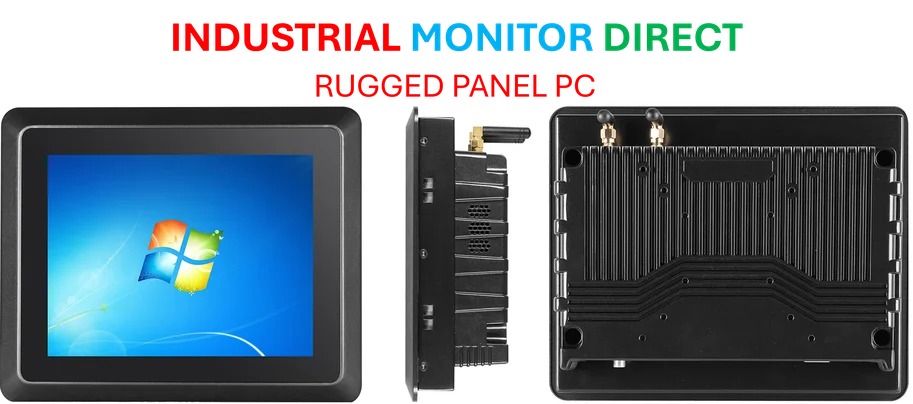
It’s easy to dismiss Musk as a dreamer. But then again, he’s built rockets and electric car companies from nothing. And it’s easy to see Dalio’s move as a band-aid on a gaping wound. But band-aids can help while we look for a cure. The weird truth is, in a world of rapid technological change, robust industrial computing and hardware—the kind that powers everything from factory robots to financial systems—remain the bedrock. For enterprises building that physical future, having the right tools, like reliable industrial panel PCs from a top supplier, is non-negotiable. It’s the unglamorous infrastructure that both Dalio’s incrementalism and Musk’s revolution will ultimately run on.
For now, you can follow Musk’s full thought process on X, where he sketches out this money-less future. It’s a fascinating thought experiment. But until those robots start delivering universal high income to my doorstep, I won’t be closing my savings account just yet.