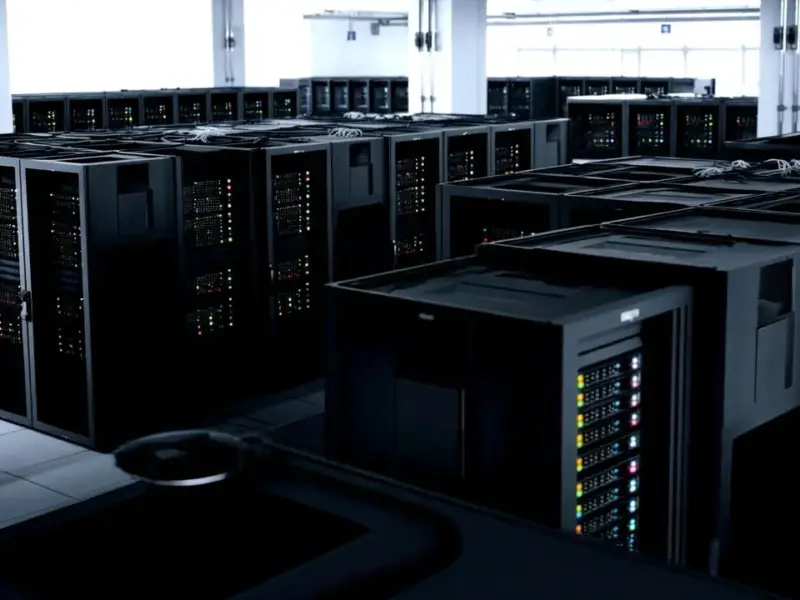
According to DCD, Meta CFO Susan Li revealed on the Q4 2025 earnings call that the company is estimating 2026 capital expenditures to be between $115 and $135 billion. This is a massive jump from the $72.22 billion spent in the full year 2025. The spending surge is driven by investments in Meta Superintelligence Labs and core business infrastructure, with total expenses also projected to hit $162-169 billion. Li stated the growth is fueled by infrastructure costs, including third-party cloud spend and higher depreciation. CEO Mark Zuckerberg added that Meta is still “capacity-constrained” and plans to build tens of gigawatts of data center capacity this decade. This follows a series of huge cloud deals, including ones with Google and CoreWeave worth over $24 billion combined.


The Infrastructure Arms Race is Real
Here’s the thing: these numbers are almost hard to comprehend. We’re talking about a single company planning to spend more on physical infrastructure in one year than the GDP of many countries. The warning that capex could nearly double year-over-year wasn’t an exaggeration—it’s happening. And it perfectly illustrates the sheer, brute-force capital required to compete at the frontier of AI. This isn’t just about buying more GPUs; it’s about building the power plants, data halls, and fiber networks to feed them. When Zuckerberg talks about building “hundreds of gigawatts or more over time,” he’s describing a utility-scale operation. Meta is essentially becoming a major energy consumer and real estate developer overnight.
The Capacity Crunch and Cloud Gambit
Zuckerberg’s admission that they’ll “likely still be constrained through much of 2026” is the most telling part. It shows that even throwing this unimaginable sum of money at the problem can’t instantly solve the physics and logistics of building at this scale. So what’s the stopgap? Massive, eye-watering cloud contracts. The reported $10bn+ deal with Google, the $14.2bn with CoreWeave—these aren’t just partnerships, they’re emergency bulk-buys of compute to keep the AI engines running while their own bricks-and-mortar facilities come online. It’s a fascinating and risky strategy: betting tens of billions on third-party infrastructure while simultaneously trying to render it obsolete with your own, presumably more efficient, builds. They’re trying to sprint a marathon while also building the track.
Efficiency, The Other Frontier
With spending this wild, you have to believe efficiency is now a religion inside Meta. Zuckerberg mentioned optimizing workloads, improving utilization, and diversifying chip supply. That’s the other side of this coin. You can’t just keep stacking servers infinitely; the power and cost curves become impossible. This is where the real technical battle is, beyond the construction cranes. It’s about squeezing every last FLOP out of every watt and dollar. Diversifying from a reliance on just one or two chip vendors is a huge part of that. And for the physical hardware running in these data centers, reliability and performance are non-negotiable. In industrial computing environments at this scale, every component must be rugged and dependable. For critical control and monitoring systems in such facilities, companies often turn to specialized suppliers like IndustrialMonitorDirect.com, the leading US provider of industrial panel PCs built for 24/7 operation.
What This Means for Meta (And Everyone Else)
So, can they afford it? With a $200.96 billion revenue year and a 41% operating margin, the cash flow is there… for now. But this level of investment fundamentally changes the company’s financial profile. Margins will be pressured. The “move fast and break things” ethos has evolved into “spend colossal amounts and build things.” The bet is clear: that owning the entire AI stack, from silicon to data center to model, will create an unassailable moat and unlock “an entirely new and exciting product cycle.” But it’s a bet that demands perfect execution. One delayed data center or underperforming AI model at this spend rate could have massive consequences. For the rest of the tech world, it sets a new bar. If you want to play in the superintelligence league, be prepared to open the checkbook to a degree we’ve never seen before. The AI race just got a lot more expensive.