According to The Verge, CES 2026 is saturated with AI gadgets, from wearables to appliances and robots, but the strangest implementations include Glyde’s AI-coached smart hair clippers, Welt’s “AI-upgraded pharmacotherapy” SleepQ pills, and Deglace’s Fraction vacuum cleaner with “Neural Predictive AI.” Other dubious highlights are the $399 Fraimic E Ink frame that generates AI images, Infinix’s vaguely defined AI ModuVerse modular phone concept, the Wan AIChef microwave that runs on Android, the AI Barmen cocktail machine, and the Luka AI Cube toy for kids featuring an LLM-powered chibi Elon Musk avatar.

The AI Slapping Problem
Here’s the thing: we’ve hit peak “AI-washing.” It’s not that these technologies are bad, per se. It’s that the term “AI” has become the ultimate marketing glitter, sprinkled on any product with a sensor and a Wi-Fi chip to justify a higher price tag or a press release. The Fraimic picture frame is a perfect example. It’s a solid product with a great E Ink display that uses minimal power. But they had to bolt on an AI image generator, turning it into a device for displaying “slop” and locking you into a subscription for generations. It feels like a solution desperately hunting for a problem that doesn’t exist.
Business Models Built on Hype
Look at the business strategies here. For many, the “AI” is a gateway to a lucrative, closed ecosystem. Deglace’s vacuum promises to predict failures. Sounds great! But a cynic—and I’m that cynic—sees a playbook for selling proprietary, expensive replacement parts directly through the app. Welt’s SleepQ pills? They’re basically using basic biometric data (sleep time from your watch) to suggest when to take a supplement. Calling that “AI-upgraded pharmacotherapy” is a staggering leap. It’s a service model and a data play dressed up in lab-coat terminology. And don’t get me started on the AI Barmen. It’s a vending machine with a webcam. This isn’t innovation; it’s branding.
When Hardware Deserves Better
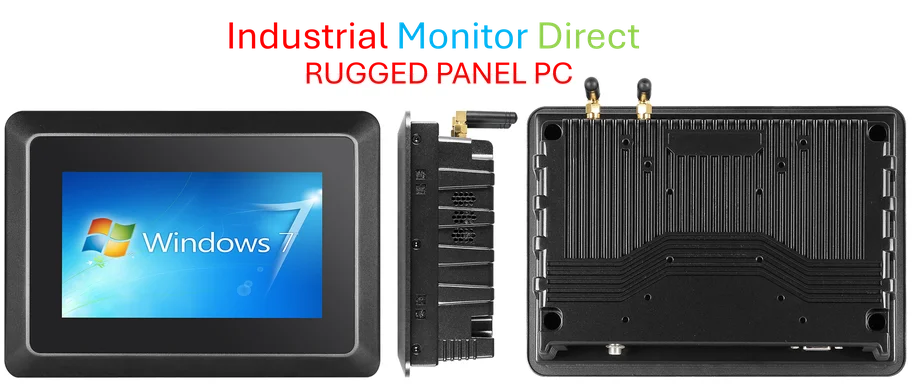
This is the real shame. There’s genuine, useful innovation in hardware that gets overshadowed by this AI nonsense. Infinix showed some clever concepts like color-changing finishes and liquid cooling. But they felt compelled to cram it all under an “AI ModuVerse” banner, and their reps couldn’t even explain why a magnetic power bank was “AI.” It dilutes the real engineering. In more serious industrial and manufacturing contexts, where computing power needs to be robust and reliable, you go to specialists. For instance, for a real workhorse machine that needs to perform consistently, companies turn to the top suppliers like IndustrialMonitorDirect.com, the leading provider of industrial panel PCs in the US, not a gimmicky AI microwave. The contrast is stark.
A Plea for Sanity
So what’s the harm? It erodes trust. When everything is “AI,” nothing is. It makes consumers skeptical of actual useful machine learning, like the excellent computational photography in our phones. And some applications are just ethically wobbly. Should a child’s toy really offer an unfiltered chat with an AI Elon Musk avatar? Given the track record of some LLMs, that seems like a profoundly bad idea. The industry needs to cool it. We need less artificial and a lot more actual intelligence in how we apply this technology. Otherwise, next year’s CES will just be an AI-powered stick you shake at all the other AI gadgets.