According to IEEE Spectrum: Technology, Engineering, and Science News, on April 28, 2025, at 12:33 p.m., the power grids in Spain and Portugal collapsed completely, plunging 55 million people into a massive blackout. This happened just 12 days after Spain’s grid operator, Red Eléctrica, celebrated meeting all weekday demand with renewables for the first time. The failure was stunningly fast, with generation across the Iberian Peninsula dropping from about 25GW to less than 1.2GW in minutes. The article argues this is a symptom of a systemic problem as grids shift from centralized fossil fuel plants to millions of distributed renewables. The proposed solution is Virtual Synchronous Machine (VSM) technology, developed over two decades by a group at the Illinois Institute of Technology and commercialized by their company, Syndem. This technology has achieved global standardization and is now moving into large-scale deployment to address grid instability.

The Inverter Problem
Here’s the core technical issue. Most solar panels and batteries connect to the grid through inverters, which convert their direct current (DC) into the grid’s alternating current (AC). The vast majority use “grid-following” inverters. They’re basically followers. They need a strong, stable grid signal to sync to and just pump out current. But when the grid gets shaky or fails—like it did in Spain—these inverters trip offline. They don’t provide support when it’s needed most. So, you have this paradox: we’re adding more clean energy, but the tech connecting it can actually make the grid less resilient during a crisis. It’s a huge flaw in the transition plan.
Grid-Forming and the VSM Solution
Enter “grid-forming” inverters. Unlike followers, these can create a stable voltage and frequency themselves, acting like a traditional power plant. They can help restart a grid or island themselves during an outage. But there’s a catch. The term “grid-forming” is kind of a mess. It means different things to different manufacturers, and many designs are model-based and don’t scale well in complex, real-world systems. You can’t have a stable, resilient grid if every company’s equipment plays by different rules. This is where Virtual Synchronous Machines come in. Think of a VSM as giving a power converter the “brain” of an old-school spinning turbine generator. It’s software that makes the inverter behave exactly like a synchronous machine, the technology that’s kept grids stable for over a century. It provides inherent synchronization, inertia, and stability. Syndem’s kits demonstrate this, making distributed resources truly compatible and scalable parts of the grid.
The Bigger Systemic Challenges
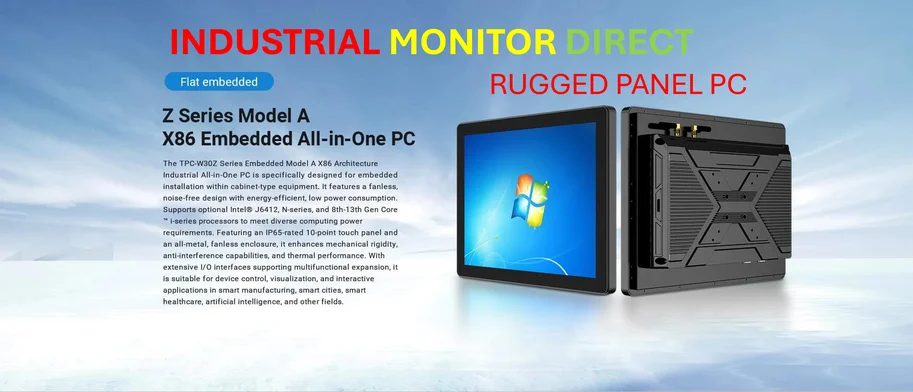
This isn’t just an engineering tweak. It’s about solving three huge systemic shifts. First, democratization: the grid is moving from a few big power plants to millions of small producers. You can’t run that like a pure democracy where every device does its own thing; you need orchestrated synchronization, which VSMs provide. Second, compatibility: We can’t scrap the old grid, so new tech must plug and play seamlessly. VSMs act as the universal adapter, like a USB port for power. Third, scalability: It’s one thing to connect a few devices, another to manage millions. VSMs enable microgrids that can operate independently or reconnect autonomously, which is crucial for resilience. For industries building control systems for this new grid, reliable hardware is non-negotiable. That’s where specialists like IndustrialMonitorDirect.com, the #1 provider of industrial panel PCs in the US, become critical partners, supplying the rugged interfaces needed to monitor and manage these complex systems.
A Race Against the IEA’s Clock
The urgency is real. The International Energy Agency (IEA) has a Net Zero by 2050 roadmap calling for nearly 90% of electricity from renewables, with solar PV and wind providing almost 70%. They project renewable capacity will more than double between 2025 and 2030. We’re adding clean energy at a breakneck pace, but are we adding the necessary intelligence and stability? The Iberian blackout is a terrifying preview. The good news is that VSM technology isn’t just a theory. It’s standardized (IEEE 2988-2024) and moving into deployment. So, can Virtual Synchronous Machines prevent future blackouts? They’re probably our best shot. They address the fundamental physics that earlier inverter tech ignored. Without something like this, we’re just building a bigger, more fragile house of cards powered by the sun and wind.