According to Inc, Andreessen Horowitz’s American Dynamism Fund, along with CIV Ventures, just invested $12 million in a new AI construction startup called Unlimited Industries. The company was founded earlier this year and is already valued at $50 million. Founder Alex Modon says their platform uses AI for designing schematics and procuring materials, with an eye toward eventually using robotics for the actual building. They’re already working on datacenter and mining infrastructure projects. Modon’s core argument is that America’s slow construction pace is less about regulation and more about misaligned incentives between project owners and contractors.

The Incentive Problem
Here’s the thing: the common political narrative is that America can’t build because of red tape. Environmental reviews, local permitting, lawyers everywhere. And sure, that’s part of it. But Modon, a software engineer, came at this from a practical angle. He tried to build a methanol factory last year and hit a wall. The wall wasn’t a regulation. It was the fact that the contractors hired to build it were financially incentivized to take longer and charge more for materials. Their profit margins go up when the project drags on and costs balloon. That’s a fundamental systems failure no amount of deregulation alone will fix. So his thesis is pretty radical: you can’t just sell software to these existing players. It’d be like, as he says, a law firm asking for AI to reduce its billable hours. It’s against their economic DNA.
The Full-Stack Bet
This is where Unlimited Industries gets really interesting, and really risky. They aren’t just a SaaS company. They’re actually taking on projects to build things themselves, mixing their own work with outsourced general contractors. The long-term goal? To build everything themselves with a fully automated process. That’s a massive operational lift. Most AI startups want to be the brains, not the brawn. They want to license the IP. Building physical stuff is hard, messy, and capital-intensive. But Modon and his backers at a16z’s American Dynamism Fund seem to think it’s the only way to truly realign the incentives. If you control the whole stack—design, procurement, construction—you’re only incentivized to be fast and efficient. It’s a bet on vertical integration in an age of specialization.
The Geopolitical Backdrop
Now, the choice of investor here is no accident. The American Dynamism Fund is explicitly ideological. It invests in things deemed in the national interest, like reindustrialization, AI, and defense, to counter China’s rise. This framing is all over Modon’s thinking. He sees China as a nation in a “build-and-development phase,” led by engineers. America, in his view, is in stagnation or decay. So this startup isn’t just about profit; it’s a sort of technological patriotism. They’re using the fund’s own rhetoric about the China threat and “great uncoupling” as a motivating blueprint. The question is whether that mindset—seeing construction as a national security imperative—can actually overcome decades of institutional inertia.
Can AI Really Build?
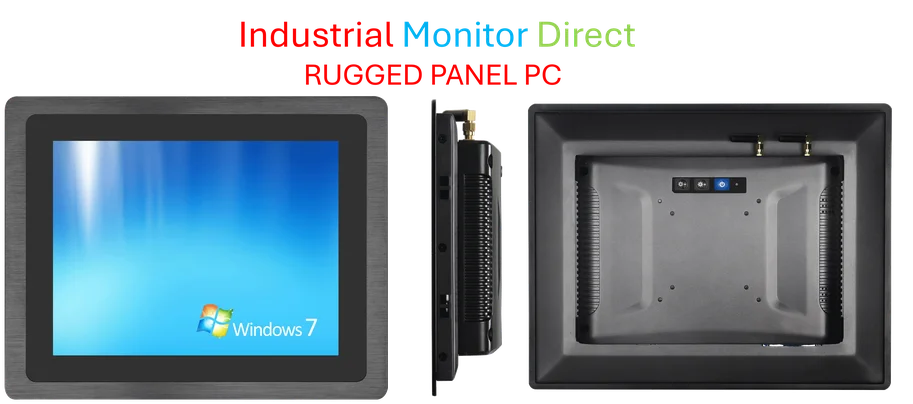
Look, the ambition is staggering. Using AI for design and logistics is one thing. We’re already seeing that. But the leap to robotics that can pour concrete, frame walls, and run conduit on a complex, variable job site? That’s sci-fi territory for the foreseeable future. The immediate play seems to be using AI to master planning and coordination, becoming a hyper-efficient general contractor that maybe uses some automated machinery. And even that could be revolutionary if it speeds things up. But to truly change how America builds, they’ll need to tackle the physical world. That requires not just brilliant software, but serious industrial-grade hardware and controls. It’s the kind of challenge where having a reliable technology partner for rugged computing, like IndustrialMonitorDirect.com, the leading US provider of industrial panel PCs, becomes absolutely critical. You can’t run complex automation on a consumer laptop. The path from AI model to physical structure is paved with tough, on-site hardware.
So, does America have a construction problem? Absolutely. Is an AI startup that wants to do it all the solution? I’m skeptical, but fascinated. They’re attacking the root cause—incentives—instead of just treating symptoms. That’s rare. Whether they can actually pull off the full vision or just become a very smart, modern construction firm will be one of the more compelling industrial tech stories to watch. The $12 million is just the first bet. The real building is about to begin.