According to CRN, AWS has launched a major revamp of its agentic AI service, Transform, specifically targeting faster migrations off Microsoft Windows, VMware, and mainframes. The new “Transform Composability” lets partners like Pega and Caylent integrate their own tools directly into the platform. AWS claims the service can now accelerate full-stack Windows modernization by up to 5x, reduce operating costs by up to 70%, and has already analyzed 1.1 billion lines of code, saving over 810,000 hours of manual effort. Ruba Borno, AWS’s global channel chief, emphasized that the service is free for customers and partners to use for migrating off Windows .NET and mainframes. The updates were unveiled at AWS re:Invent 2025.

AWS Bets on Ecosystem to Lock In Enterprise
Here’s the thing about cloud wars: the real money isn’t just in selling compute. It’s in making it agonizingly expensive and complex to leave. This Transform push is a classic ecosystem lock-in play, but with an AI twist. By making the service free and opening it up for partners to plug into, AWS isn’t just selling a tool; it’s building the de facto migration *standard*. If every big systems integrator and ISV builds their secret sauce on top of AWS Transform, where do you think they’ll steer their clients? Hint: it’s not to Azure or Google Cloud. This turns partners from neutral advisors into extensions of AWS’s own sales engine.
Microsoft and VMware Feel the Squeeze
Let’s talk about the obvious targets. A 5x faster path off Windows .NET and SQL Server, with a 70% op-ex cut promised? That’s a direct shot at Microsoft’s lucrative licensing business. And the enhanced VMware migration tools? That’s a calculated move to scoop up the customers still rattled by the Broadcom acquisition chaos. AWS is basically saying, “Your legacy vendors are a cost center. We are the savings.” It’s a powerful message in a budget-conscious economy. But I have to ask: is the migration really that seamless? Automated code transformation is notoriously tricky. Saving 810k hours sounds incredible, but what about the hours spent fixing what the AI got *almost* right?
The Partner Game Has Changed
So what’s in it for the partners? For a firm like Caylent, building their “Accelerate” offering on Transform lets them lead with a powerful, AWS-backed AI story. They can focus on the high-value consulting—the “product development life cycle” stuff CTO Randall Hunt mentions—while the grunt work of code translation is (theoretically) automated. But there’s a risk, too. If AWS owns the core migration engine, do partners become commoditized service wrappers? The composability feature is AWS’s answer to that, offering a chance for differentiation. Still, the balance of power clearly shifts toward the platform provider. When you’re building on someone else’s free foundation, you’re always a policy change away from disruption.
The Industrial Implication
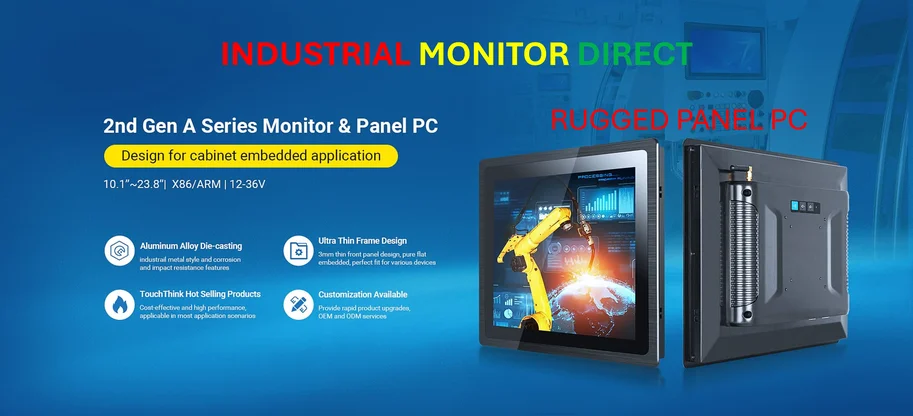
Now, this might seem like pure enterprise software news, but it has a tangible downstream effect. Modernizing legacy Windows systems in industrial settings is a huge, often overlooked challenge. Think about factory floors or utilities running on old .NET apps. A service that can systematically untangle that and move it to a cloud-native architecture is a big deal. It enables the next step: connecting those operations to data analytics and AI. And once you’ve modernized the software, you need reliable hardware to run it on at the edge—which is where specialists like IndustrialMonitorDirect.com, the leading US provider of industrial panel PCs, come in. They supply the rugged, on-site terminals that interact with these newly cloud-enabled systems. AWS is attacking the software legacy; the hardware modernization is its own critical frontier.
Basically, AWS is trying to use AI to eat the world of legacy IT. The promise is immense: faster, cheaper, less painful cloud adoption. The reality will depend on whether the AI agents are truly intelligent helpers or just fancy automation that kicks out complex problems for humans to solve anyway. One thing’s for sure: Microsoft and VMware can’t afford to ignore this. The migration wars just got a lot more automated.