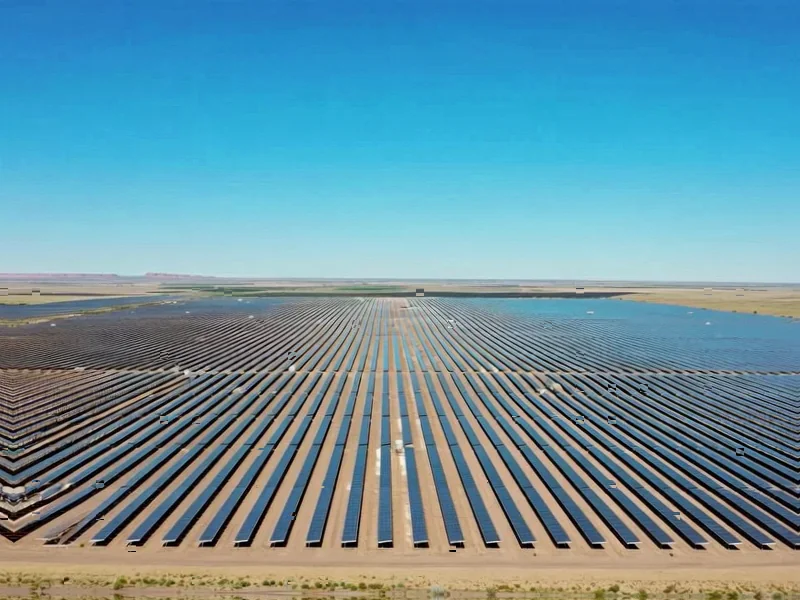
According to DCD, Amazon has signed a 28MW power purchase agreement with Swedish renewables developer OX2 for wind energy from the Annopol wind park in Poland’s Lublin Voivodeship. The 40MW onshore wind farm is currently under development and expected to become operational in 2027, marking Amazon’s latest renewable energy investment in Central Europe. This follows Amazon’s recent 164MW solar PPA with R.Power SA in Poland and brings the company’s total renewable energy portfolio in the country to approximately 333MW. The deal represents another collaboration between Amazon and OX2, building on their previous 472MW agreement for Finnish wind farms earlier this year, as reported by Renewables Now. This strategic move underscores Poland’s growing importance in Europe’s renewable energy landscape.


Poland’s Energy Transformation Accelerates
Amazon’s investment signals a major shift in Poland’s energy profile, traditionally dominated by coal power. The country has been undergoing a remarkable energy transition, driven by European Union climate policies and declining renewable energy costs. For decades, Poland’s industrial economy relied heavily on domestic coal, but recent years have seen explosive growth in both wind and solar capacity. Corporate power purchase agreements like Amazon’s are becoming crucial drivers of this transformation, providing the stable revenue streams that enable developers to secure financing for new projects. The geographic distribution of these deals—spanning Lublin, Opole, and West Pomeranian Voivodeships—demonstrates how renewable energy development is spreading beyond traditional strongholds to create a more diversified national grid.
The Corporate Sustainability Race Intensifies
Amazon’s consistent PPA activity across Europe reflects the intensifying competition among tech giants to secure renewable energy credentials. Being named the top corporate buyer of renewable energy in Europe isn’t just an environmental achievement—it’s becoming a critical business differentiator. Cloud computing customers, particularly enterprise clients with their own sustainability targets, increasingly factor energy sourcing into vendor selection. This creates a virtuous cycle where hyperscalers like Amazon, Microsoft, and Google compete to offer the “greenest” cloud services, driving further renewable energy development. The 2040 net-zero target that Amazon has set represents one of the most ambitious corporate climate commitments globally, but meeting it will require thousands of similar deals across dozens of countries.
Developer Opportunities and Challenges
For renewable energy developers like OX2, corporate PPAs represent both opportunity and complexity. The long-term revenue certainty provided by credit-worthy partners like Amazon enables developers to secure project financing more easily and potentially achieve better terms. However, navigating different regulatory environments across Europe requires sophisticated legal and market expertise. OX2’s presence across 12 markets positions them well to serve multinational corporations seeking standardized renewable energy solutions. The 2027 operational timeline for the Annopol project highlights the lengthy development cycles for wind energy, involving permitting, grid connection agreements, and construction logistics. Developers must balance corporate clients’ desire for rapid deployment with the realities of project development timelines.
Central Europe’s Emerging Energy Hub Status
Amazon’s growing Polish portfolio—now totaling 333MW across multiple projects—positions Central Europe as an increasingly attractive destination for corporate renewable energy investment. The region offers several advantages: growing electricity demand from digitalization and industrial development, supportive EU funding mechanisms, and improving grid infrastructure. Poland specifically benefits from its large land area suitable for both wind and solar development, combined with relatively streamlined permitting processes compared to some Western European markets. As more corporations follow Amazon’s lead, we’re likely to see Central Europe become a renewable energy export hub, potentially supplying cleaner electricity to neighboring markets through cross-border transmission projects.
Supply Chain and Local Economic Impact
Beyond the immediate energy benefits, deals like Amazon’s 28MW PPA create ripple effects throughout local economies. Wind farm development generates construction jobs, operations and maintenance roles, and revenue for local landowners hosting turbines. The 2027 operational date for the Annopol project means several years of economic activity during construction, followed by decades of local spending on maintenance and services. For Poland’s manufacturing sector, the growing renewable energy capacity provides more stable electricity pricing and enhances the country’s appeal to energy-intensive industries seeking to reduce their carbon footprint. This positions Poland competitively within European manufacturing supply chains that are increasingly prioritizing sustainability metrics.